



The site BillionGraves provides tools to search for the graves of your ancestors. This article gives a step-by-step guide to find a grave.
Step 1: Set up a free account and sign in.
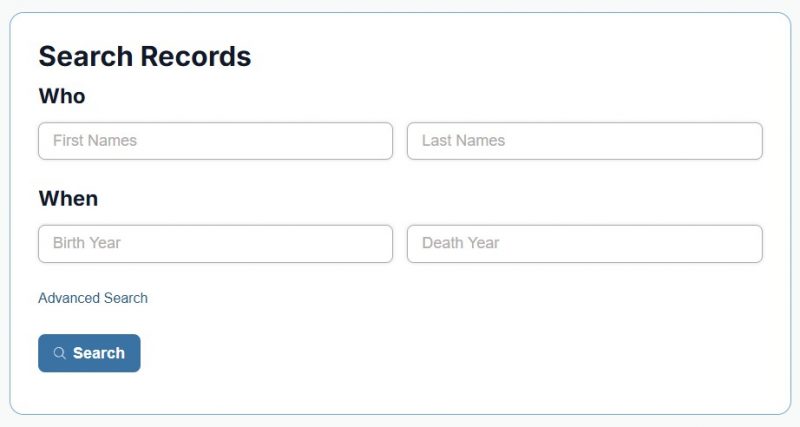
Step 2: Click Search in the upper right corner and enter names and years to search.
Step 3: After the record has been found, you will see information from the gravestone, such as names, dates, ages, and military service. You will also see photographs of the gravestone. High-resolution images are unlocked through BillionGraves Plus (an upgraded subscription).

With an upgraded subscription, you can also see Nearby Graves. These are burials that are close to the gravestone you are researching. You can also see related records, such as a spouse, parents, siblings, children, and grandparents.

There is a map of the cemetery, which can be enlarged.

There is also a link to view the person you are researching on the FamilySearch family tree.

You can view the epitaph and memories.

For professional genealogists, there is an easy to use Source Citation section for creating genealogy reports.

To get the most out of your BillionGraves research, you can connect your FamilySearch family tree to your BillionGraves family tree.
From the BillionGraves dashboard, select the button labeled, “Go to Family Tree”.

Then sign in using your FamilySearch account. If you have created a family tree on FamilySearch, you can easily migrate the information to BillionGraves by clicking a few buttons.

It may take up to an hour for the data to load, depending on the size of your family tree. Once the information has loaded, you can select an ancestor and the BillionGraves’ record finder will guide you step-by-step to find the final resting place of your ancestor.
Continue reading at the original source →