


The Book of Abraham is often discussed in terms of controversy. The papyrus Joseph Smith used during the translation was lost for more than a century. When a portion of that papyrus later resurfaced, it appeared at a time when scholars had a far better understanding of the Egyptian language. Modern scholars give a different interpretation of the Papyrus facimiles than did Joseph Smith. Because of this, critics have treated the Book of Abraham as a central argument against Joseph Smith’s prophetic claims. For many, it is viewed as proof that he invented the text rather than translating an ancient record.
That conclusion, however, depends on a numerous assumptions. It assumes the Book of Abraham must be judged only by modern academic translation standards. It assumes the surviving papyrus represents the entire source of the text. It also assumes Joseph Smith was working from nineteenth century knowledge rather than revelation. Because so many assumptions are required to dismiss the text, a better approach is to examine the Book of Abraham itself.
When we look at the content of the Book of Abraham, does it read like a nineteenth century creation, or does it reflect ideas, structures, and knowledge rooted in the ancient world?
The evidence consistently points in one direction. The Book of Abraham reads like an ancient record.
Abraham Creation Account Closer to Hebrew than King James Bible
The Book of Abraham includes a creation account similar to Genesis, but with clear and meaningful differences. These differences are not random. They consistently align more closely with the underlying Hebrew concepts found in the biblical text than with the English wording of the King James Bible.
I reviewed these differences with my assistant, ChatGPT, comparing Genesis 1 and 2 with Abraham 4 and 5 alongside the Hebrew text. The result was striking. In multiple places, the Book of Abraham preserves ancient Hebrew ideas that are muted or obscured in the King James translation.
Joseph Smith did later study some Hebrew. A Hebrew instructor was hired in 1836. However, the Book of Abraham translation began before that time, and there is no record showing Joseph ever achieved fluency in Hebrew. The question naturally follows. If Joseph Smith was inventing the Book of Abraham, how did he consistently land closer to ancient Hebrew meanings than the Bible translation he already owned?
Below are key examples.
| Topic | KJV Genesis 1–2 | Book of Abraham 4–5 | Hebrew Text / Ancient Meaning | Why Abraham Is Closer |
|---|---|---|---|---|
| Creator(s) | “God created…” (singular) | “The Gods organized…” | Elohim = grammatically plural noun | Abraham preserves the plural divine council context inherent in Hebrew |
| Creation Verb | “Created” | “Organized” | baraʾ = assign, shape, order, appoint function | Abraham reflects functional organization rather than creation ex nihilo |
| Pre-existing Matter | Implied creation from nothing | Matter already present | Gen 1:2 already has earth existing as tohu va-bohu | Abraham explicitly matches the Hebrew assumption of existing matter |
| Creation Process | Linear narrative | Iterative, council-based | Hebrew storytelling is cyclical and deliberative | Abraham mirrors Hebrew narrative rhythm |
| Divine Council | Absent / obscured | Gods “took counsel together” | Psalm 82, Job 1, Isa 6 show divine council | Abraham restores an ancient worldview missing in KJV |
| Light | “God said, Let there be light” | Light is governed and measured | Light in Hebrew thought = cosmic order, not just sunlight | Abraham treats light as a governing principle |
| Sun and Moon | “Two great lights” | Governing bodies set after light | Hebrew avoids naming sun/moon (anti-idolatry) | Abraham maintains hierarchy of light over luminaries |
| Firmament | “Firmament” | “Expanse” | raqiaʿ = spread-out space | Abraham avoids medieval “solid dome” imagery |
| Days of Creation | “Day” (implied 24 hrs) | Time is “reckoned” | yom = period, age, era | Abraham preserves semantic flexibility |
| Command Language | God “made” | Gods “commanded” | Creation by decree is dominant in Hebrew | Abraham emphasizes authority over mechanics |
| Purpose of Creation | Goodness stated immediately | Goodness after function | Hebrew “good” = fit for purpose | Abraham reflects functional completion |
| Human Creation | Immediate action | Divine discussion first | Hebrew narrative pattern: decree → execution | Abraham preserves deliberative structure |
| Role of Humanity | Created last | Planned early | Humans central in divine intent | Abraham matches ancient cosmology |
| Rest on Seventh Day | God rests | Gods cease organizing | Sabbath = completion, not fatigue | Abraham aligns with covenant theology |
| Voice of God | Singular | Collective divine action | Elohim often paired with plural verbs | Abraham resolves grammatical tension |
| Creation Scope | Earth-centered | Cosmic hierarchy | Ancient cosmology is layered | Abraham expands to ancient worldview |
Ancient Language and Cultural Understanding
Language is one of the hardest things to fake. Meanings shift over time, especially in ancient languages where words carry layered ideas. Guessing correctly once might be luck. Guessing correctly across multiple independent concepts points to something else.
The Book of Abraham repeatedly aligns with older conceptual meanings rather than later theological assumptions.
Dr. Kerry Muhlestein is a trained Egyptologist with a Ph.D. in Egyptology from UCLA and decades of academic work in ancient Near Eastern studies. He has directed archaeological excavations in Egypt and taught ancient scripture and Egyptian religion at the university level. He has explained that the Book of Abraham contains ancient concepts and cultural details that were not understood or available in Joseph Smith’s day.
In his book Let’s Talk About the Book of Abraham, he presents multiple examples where the likelihood of Joseph Smith correctly guessing these details would be extremely small. The cumulative accuracy of so many ancient elements makes coincidence virtually impossible.
Words Joseph Smith Didn’t Know
Shinehah
One example is the word Shinehah, which the Book of Abraham identifies as referring to the sun and its movement. At the time the Book of Abraham was published, Egyptologists had not identified an Egyptian word with this meaning.
Later research into Egyptian texts from periods associated with Abraham revealed a term pronounced Shaneha or Shinehah that referred to the sun’s course across the sky. This was not the standard Egyptian word used in later eras. The match is specific in meaning and time period.
Joseph Smith did not have access to Egyptian grammar, period-specific vocabulary, or comparative linguistic databases. These connections were identified only after those tools became available.
Kolob and Ancient Astronomy
Kolob is often dismissed as a made-up word, but its description in the Book of Abraham fits ancient astronomy and theology in ways Joseph Smith could not have known. In Abraham chapter 3, Kolob is the greatest governing star, nearest to God, and central in authority. Ancient Egyptian and Near Eastern cultures used stars to represent rank, power, and divine order. Kolob functions exactly this way. It is not presented as a scientific claim, but as a symbolic teaching tool that connects the heavens to divine governance.
Even the meaning of the name is significant. The Book of Abraham explains Kolob as being “near unto God,” which aligns with an ancient Semitic root meaning “to be near” or “to draw close,” found across early Semitic and Egyptian-related languages. This kind of name-based wordplay was common anciently but unknown in Joseph Smith’s day. The alignment between the word, its meaning, and its role strongly suggests an ancient framework rather than a nineteenth-century invention.
Geography Unknown in Joseph Smith’s Day
The Book of Abraham refers to the Plains of Olishem, a location not mentioned in the Bible or nineteenth century reference works. For many years, critics assumed the name was invented.
But, ater discoveries of Akkadian texts identified a place called Ulisum in the region associated with Abraham’s early life. In Semitic languages, shifts between O and U and between S and SH are common. The linguistic match is reasonable and expected.
More importantly, the geographic placement aligns with the Book of Abraham narrative. The correspondence is linguistic, chronological, and geographic.
If Joseph was just making up the Book of Abraham he guessed not only the right unknown area, but put it in the right geographic location.
Human Sacrifice and Religious Conflict
The Book of Abraham describes an attempt to kill Abraham because he rejected local gods. For much of the twentieth century, Egyptology textbooks taught that Egyptians did not practice human sacrifice. This became a frequent criticism of the text.
Later research showed that human sacrifice did occur in Egypt, particularly in religious or cultic contexts. Evidence places these practices during the general time frame associated with Abraham. The method described in the Book of Abraham, killing followed by burning, matches known ancient procedures.
The historical context fits the narrative.
Abraham Traditions Verified by Apocryphal Sources
The Book of Abraham includes many details that are not included in the Bible, but these details are confirmed in later Jewish and Islamic traditions. These include accounts of Abraham opposing idolatry, teaching religious knowledge, and facing attempts on his life.
Here’s a list of a few of them and the Apocryphal Sources that tell the same story:
| Tradition Found in the Book of Abraham | Ancient / Apocryphal Sources with Parallels | Notes on the Parallel |
|---|---|---|
| Abraham’s fathers worshipped idols | Apocalypse of Abraham; Book of Jubilees; Genesis Rabbah | Terah is portrayed as an idol worshipper and idol maker |
| Idols made of wood and stone | Apocalypse of Abraham; Genesis Rabbah | Matches Book of Abraham language closely |
| Terah worshipped idols | Apocalypse of Abraham; Jubilees | Explicitly stated |
| Terah repented then returned to idolatry | Apocalypse of Abraham; Genesis Rabbah | Same narrative arc as Book of Abraham |
| Abraham connected to Egyptian idolatry | Josephus; Jubilees; Pseudo-Philo | Abraham confronts false religion in Egypt |
| Children were sacrificed | Apocalypse of Abraham; Jubilees; Midrash Tanhuma | Human sacrifice tied to false worship |
| Refusal to worship idols led to death | Apocalypse of Abraham; Genesis Rabbah | Non-participants are killed |
| Abraham nearly sacrificed for refusing idols | Apocalypse of Abraham; Genesis Rabbah; Book of Jasher | Often described as execution by fire |
| Terah involved in attempt to kill Abraham | Apocalypse of Abraham; Genesis Rabbah | Familial betrayal is explicit |
| Abraham prayed when his life was in danger | Apocalypse of Abraham | Prayer leads to divine deliverance |
| Altar or furnace destroyed | Apocalypse of Abraham; Jubilees | Divine intervention destroys idols |
| Priest or leader smitten and dies | Apocalypse of Abraham | Matches Book of Abraham narrative |
| Abraham heir to priesthood of the fathers | Apocalypse of Abraham; Dead Sea Scrolls (Melchizedek texts) | Authority predates Moses |
| Abraham held priesthood authority | Apocalypse of Abraham; Josephus | Abraham portrayed as priestly figure |
| Believers blessed as seed of Abraham | Jubilees; Paul (later echo) | Covenant lineage emphasized |
| Abraham possessed revelatory instruments | Apocalypse of Abraham; later Jewish mystical texts | Urim-and-Thummim–like function |
| Abraham knowledgeable in astronomy | Josephus; Philo; Jubilees; Pseudo-Eupolemus | Widely attested ancient tradition |
| Abraham taught astronomy to Egyptians | Josephus; Eupolemus | Strong external corroboration |
| Abraham knew about the Creation | Apocalypse of Abraham; 1 Enoch | Creation knowledge revealed to him |
| Advance planning for Creation | Apocalypse of Abraham; 1 Enoch; Dead Sea Scrolls | Premortal council themes |
| Elements obeyed God | Apocalypse of Abraham; 1 Enoch | Ordered cosmos |
| Abraham saw premortal spirits | Apocalypse of Abraham; 1 & 2 Enoch | Spirits shown before mortality |
| Lord instructed Abraham about Sarah | Jubilees; Genesis Rabbah | Non-biblical clarification |
| Abraham possessed records of the fathers | Jubilees; Pseudo-Philo; Dead Sea Scrolls | Written patriarchal records |
| Abraham left a personal record | Jubilees; Pseudo-Philo | Abraham as author |
| Founding of Egypt | Josephus; Jubilees | Egypt tied to Ham’s lineage |
| Pharaoh descendant of Ham and Canaan | Jubilees; Josephus | Matches Book of Abraham genealogy |
| First Pharaoh righteous, blessed by Noah | Jubilees; Josephus | Kingship without priesthood |
| Abraham allowed to sit on a king’s throne | Josephus; Pseudo-Philo | Abraham honored as royal counselor |
| Famine in Abraham’s homeland | Jubilees; Genesis Rabbah | Central to migration narrative |
| Abraham prayed to end famine | Jubilees; Jasher | Prayer tradition preserved |
| Haran died in the famine | Jubilees; Genesis Rabbah | Extra-biblical detail |
| Abraham left Haran at age ~62 | Jubilees; Samaritan traditions | Differs from Genesis 12 |
Abraham Nearly Sacrificed by His Father
The Book of Abraham describes Abraham being targeted for sacrifice because he rejected idolatry. Critics claim this story is invented because it does not appear in the bible.
Later-discovered apocryphal sources including the Apocalypse of Abraham, Genesis Rabbah, Book of Jubilees, and the Book of Jasher describe Abraham’s father as an idol worshipper who either participated in or permitted the attempt on Abraham’s life. Several of these sources describe Abraham being bound and nearly executed for rejecting false gods, often involving fire or ritual violence.
These texts were not available in English during Joseph Smith’s lifetime. Many were not translated or widely studied until decades or even centuries later. The consistency between the Book of Abraham and these independent ancient traditions strongly suggests Joseph Smith was not inventing a story but restoring an account that had been preserved outside the Bible.
Abraham as an Astronomer
Abraham Chapter 3 tells us that Abraham possessed advanced knowledge of the stars and taught astronomy to the Egyptians. Ancient sources in Josephus, Philo, Pseudo-Eupolemus, and the Book of Jubilees also describe Abraham as an astronomer. They describe Abraham explaining the order of the heavens as part of his religious instruction. Once again, Joseph Smith had no access to these ancient sources. The repeated confirmation of Abraham’s astronomical role across independent traditions makes coincidence an unlikely explanation.
Abraham Prophesying a Famine in Chaldea
The Book of Abraham places a famine in Abraham’s homeland as a key reason for his departure. While Genesis briefly mentions famine later in Abraham’s life, it does not associate it with Chaldea or Abraham’s departure.
The Book of Jubilees, Genesis Rabbah, and other rabbinic traditions describe Abraham foreseeing or praying about a famine in his homeland, which prompted his migration. Some accounts even state that Abraham’s prayers affected the famine itself.
These sources and traditions were not available to Joseph Smith. Many of them were not discovered until after Joseph Smith had been dead for a more than a hundred years. They were preserved in texts and oral traditions outside the biblical canon and were identified later through comparative religious studies. The Book of Abraham aligns with this broader tradition rather than relying solely on biblical material. So once again, If Joseph Smith was just making things up, why were so many of these additions verified by other sources?
An Ancient Literary Form
The Book of Abraham is written as a first-person life account. Abraham introduces himself, explains his lineage, describes threats to his life, and recounts divine guidance and covenant promises.
This autobiographical covenant narrative was common in the ancient Near East but was not recognized as a literary form in Joseph Smith’s lifetime.
In 1939, scholars discovered the Idrimi inscription, an ancient autobiography from the second millennium BC. Idrimi’s account mirrors the same structure seen in the Book of Abraham. Lineage, exile, divine communication, covenant, and future promises appear in the same progression.
Joseph Smith could not have patterned his writing after a form scholars had not yet identified.
Internal Structure and Ancient Writing Pattern
The Book of Abraham is organized around expansion. It begins with Abraham’s personal relationship with God. It then expands outward to family, future generations, humanity, the heavens, and finally the Creation itself.
Each layer builds on the previous one. The structure is deliberate and consistent across chapters.
This expansion pattern matches ancient Near Eastern writing practices. Meaning develops outward from a chosen individual to the cosmos. This type of narrative design was not taught or recognized in nineteenth century religious writing, which focused on sermons or verse-by-verse commentary.
Joseph Smith had no known exposure to ancient literary theory or covenant expansion models. Yet the Book of Abraham reflects them naturally.
Conclusion
If Joseph Smith were guessing, we would expect obvious anachronisms. Instead, we see consistency across language, geography, theology, structure, and tradition.
Independent lines of evidence converge on the same conclusion. The Book of Abraham reflects ancient ways of thinking, writing, and preserving religious memory.
How did a nineteenth century farm boy produced a text that repeatedly aligns with ancient language, culture, stories, geography, and literary structure that would not be known for decades?
The simplest explanation is that the Book of Abraham is in fact from an ancient text and that Joseph Smith received this text by revelation. More evidence will be explained in the sections on regarding the individual facimiles.
The Rosetta Stone – The Ancient Relic Not Related to The Book of Abraham

Book of Abraham Facsimile 1
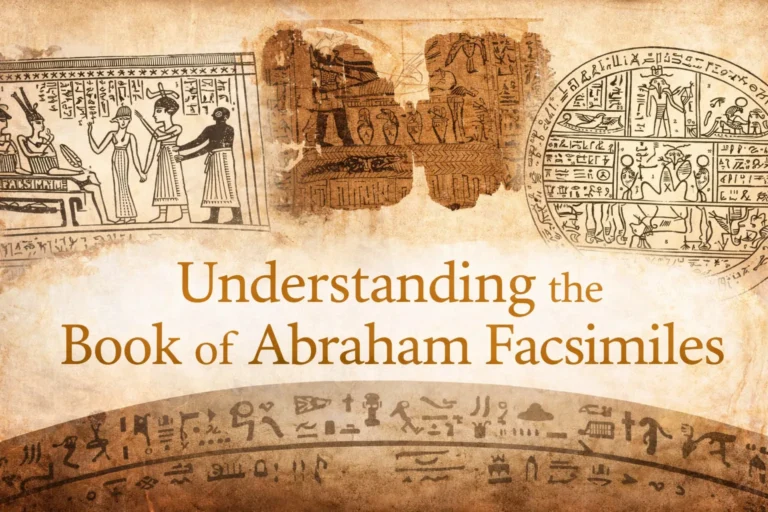
Understanding What The Book of Abraham Facimilies Are
Book of Abraham – Evidence Joseph Smith Could Not Have Known
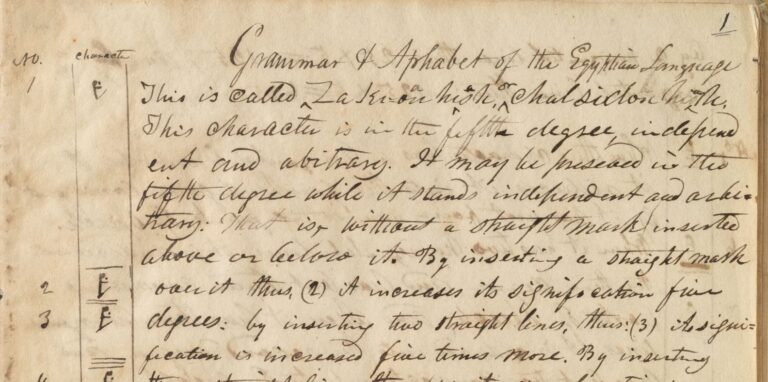
The GAEL Project – Pre-Temple Doctrine Coding?
Doctrine of the Book of Abraham
What is the Book of Abraham?
Continue reading at the original source →